What is a handwashing station?
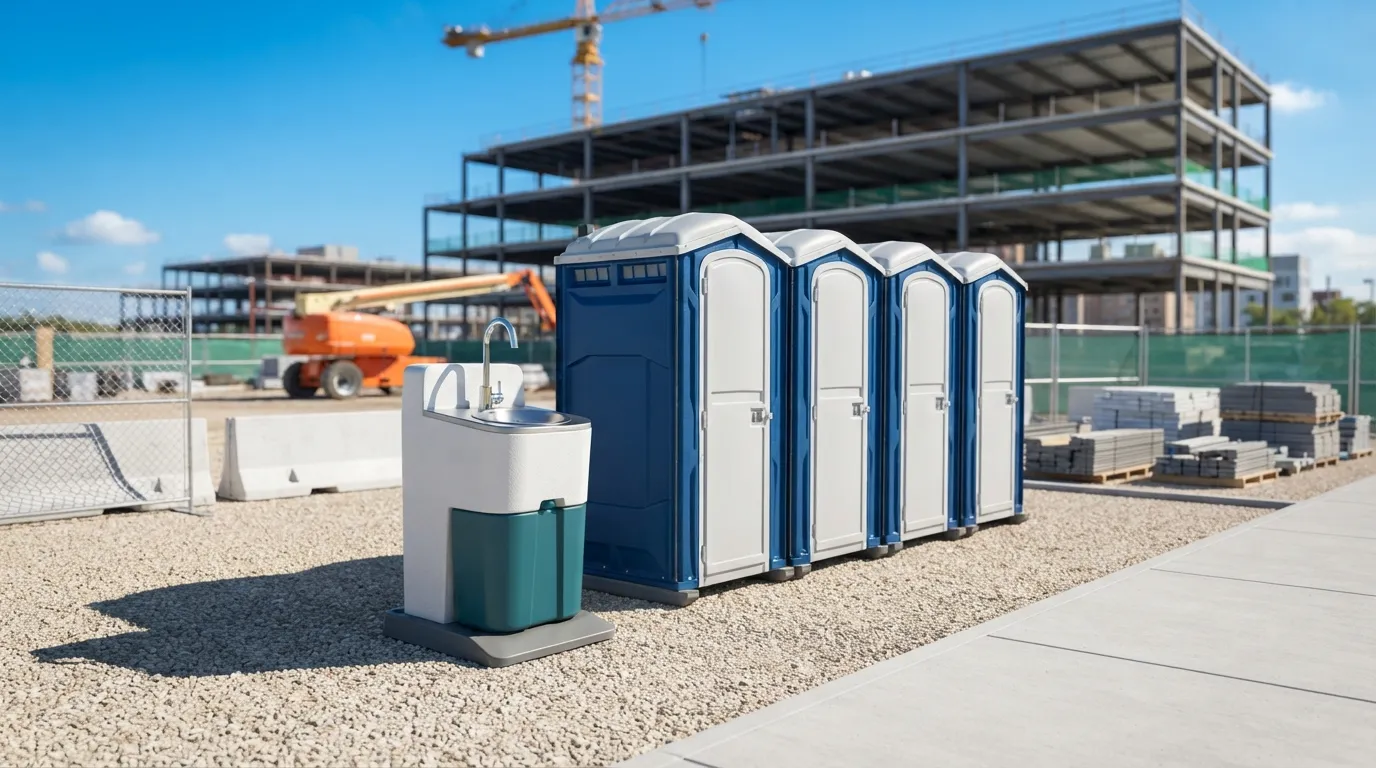
A handwash station is a self-contained portable sink with its own fresh water supply, a foot pump or hands-free pump, a wastewater tank underneath, and a soap and towel dispenser mounted on the unit. Most run on a 5 gallon fresh water reservoir for smaller jobs, though larger industrial handwash stations hold more and serve bigger crews without a refill mid-shift. They pair naturally with a standard porta potty rental or a full portable restroom rental setup, since OSHA treats sanitation and washing as connected requirements on a jobsite. If your crew is applying paints, coatings, herbicides or insecticides, OSHA 1926.51(f)(1) specifically requires washing facilities for that contaminant exposure, not just a general toilet count. Sunnyvale contractors booking a construction dumpster rental or temporary fence rental for the same site often add handwash units in the same delivery to save a trip. Some brands, including Bradley handwash station lines, get specified by name on bid documents, and we can match whatever the spec sheet calls for. A quick call before delivery day sorts out placement, since gravel, gaps in curbs, and slope all affect where a unit sits safely near your temporary power pole or light tower rental.
How many handwashing stations do I need?
Crew size drives the count more than anything else. OSHA 1926.51(c) sets toilet ratios at one per 20 workers, and pairing a handwash station with each toilet bank keeps you compliant without overthinking it. A 20-person framing crew in Sunnyvale typically runs two toilets and one to two handwash stations depending on layout and how spread out the work areas are. Event organizers use a similar logic: a food vendor row at a county fair restroom setup or a festival restroom rental deployment needs handwash stations positioned at each food stall, not clustered at one end. Farms hiring hand-labor crews fall under OSHA 1928.110, which calls for potable water, toilets and handwashing within a quarter mile walk of the work, at one facility per 20 employees. That distance rule matters for farm and agricultural restroom placement across larger parcels. If you're already running the numbers for toilets, our how many porta potties do I need guide walks through the same math side by side.
Where should a handwash station be placed?
Placement matters more than most renters expect. Ground has to be level and stable, similar to the firm, slip-resistant surface standard under ADA Standards 302.1, even for a non-accessible unit, because a tipped or sinking station is a hazard and a mess. Keep the unit close enough to the work zone that people actually use it, and close to any portable toilet rental cluster so washing follows naturally after toilet use. On jobsites, OSHA 1926.25 housekeeping rules mean you don't want a handwash station blocking a path already cluttered with debris or material staging. Delivery trucks need clearance too. A roll-off delivery needs about 60 feet of straight clearance behind the truck, and while a handwash station is lighter and easier to place than a roll-off dumpster rental, the same access logic applies if both are dropped at once. For events near Sunnyvale, we've delivered as far as Los Altos, 5.2 miles west, and Cupertino, 5.3 miles south, on the same route as a Sunnyvale drop, so multi-site jobs across nearby cities are routine. Check our service areas page for the full coverage map, including Palo Alto and Milpitas.
Do I need a permit for a handwashing station?
Permit rules depend on where the unit sits, especially if it's going in a public right of way or a street closure zone. That placement needs confirming directly with the City of Sunnyvale before delivery, since we don't publish borrowed permit numbers here. For most private property jobs, driveways, backyards and job sites behind a fence, no permit conversation is needed at all. If you're also placing a temporary fence rental or barrier along a sidewalk, that's the point to ask the city about both at once. Our porta potty permit requirements page covers the broader picture, and the dumpster permit requirements page is worth a look too if you're renting a bin for the same project. When in doubt, request a quote and we'll flag anything that looks like it needs a city call before we schedule delivery.
Pricing at a glance
| unit | duration | typical price |
|---|---|---|
| standard porta potty | day | $150 |
| standard porta potty | week | $200 |
| standard porta potty | month | $200 |
| delivery fee | day | $150 |
| delivery fee | week | $100 |
Handwash station pricing tracks closest to the delivery fee band above, since units are usually added onto an existing toilet or trailer order rather than billed alone. See our porta potty rental cost and monthly porta potty rental pages for the full breakdown by duration.
Does a handwash station need its own water hookup?
No. It carries its own fresh water tank, so no hose bib or hookup is required. OSHA 1926.51(a)(1) calls for an adequate supply of potable water at the worksite, and a self-contained unit satisfies that without plumbing.
Can I rent a handwashing station without renting a toilet?
Yes, plenty of Sunnyvale customers rent handwash stations alone for food booths, hand-labor crews, or paint and coating jobs. Check our portable sink rental and hand sanitizer station rental pages for standalone options.
How often does a handwash station need servicing?
Weekly is the baseline for moderate use, similar to the interval used industry-wide under ANSI/PSAI Z4.3 for portable sanitation. Heavy-use events or large crews often need more frequent refills and pump-outs.
What's the difference between a handwash station and a portable sink?
They're mostly the same product described two ways. Both offer a basin, foot or hand pump, soap, and towels, sized from a compact 5 gallon unit up to larger industrial handwash stations for bigger crews.
Do handwashing stations work in cold weather?
Yes, though standing water can freeze in hard cold snaps. See our porta potty in winter page for tips that apply to handwash units too, including insulation and servicing frequency.
Next step
Get a delivery date
Tell us the address, the dates and the headcount. We size the order and confirm the route.