
How many restrooms does a race actually need?
Runner counts drive the number, but so does the course shape. A 5K with a single loop needs fewer stations than a marathon with an out-and-back route and aid points spread over 26 miles. Sunnyvale Porta Pros typically plans 1 standard porta potty per 200 to 300 registered runners at the start and finish, doubled at the finish line since that is where people cluster after the race. Aid stations along the course get 1 to 2 units each, depending on spacing, and a porta john rental works fine for most of those smaller stops.
ADA Standards section 213.2 requires that where single-user units are clustered, at least 5 percent must be accessible, and never fewer than one. That means even a small aid station with 3 units needs one ADA-compliant stall, and the ramp into it has to meet a running slope no steeper than 1:12 under ADA Standards section 405.2. We stage ADA accessible porta potty units at the start line, finish line and at least one major aid station on longer courses, matching the guidance in our ADA restroom requirements guide.
For events pulling spectators as well as runners, like a finish line festival, the count climbs fast. Race organizers can check our event restroom rental page or run numbers through the how many porta potties do I need guide before locking a layout. Courses that cross into neighboring cities, such as a route toward Cupertino, CA 5.3 miles south or Los Altos, CA 5.2 miles west, may need units staged at a turnaround point too, not just the finish.
Where do restrooms and power get placed on a race course?
Placement follows the same logic as any large outdoor event: firm, level ground with clear access for the delivery truck, and enough clearance that units do not block the runner lane or a medical tent. ADA Standards section 302.1 requires the ground surface to be stable, firm and slip resistant, which usually means asphalt, packed gravel or a mowed field rather than soft turf after rain. Our porta potty placement guide covers ground prep in more depth, and the porta potty rental checklist is worth running through before delivery day.
Aid stations that run timing equipment, lighting or a PA system often need a temporary power pole alongside the restrooms. Knowing how to brace a temporary power pole matters more than people expect on a race morning: a loose pole near a runner lane is a hazard, not a convenience. The base needs to sit on stable ground per the same slip-resistance standard used for restroom placement, and guy lines or a ballasted base should hold the pole plumb before the crowd arrives, not after. Pair the pole with a light tower rental for pre-dawn starts, common on summer race mornings in Sunnyvale.
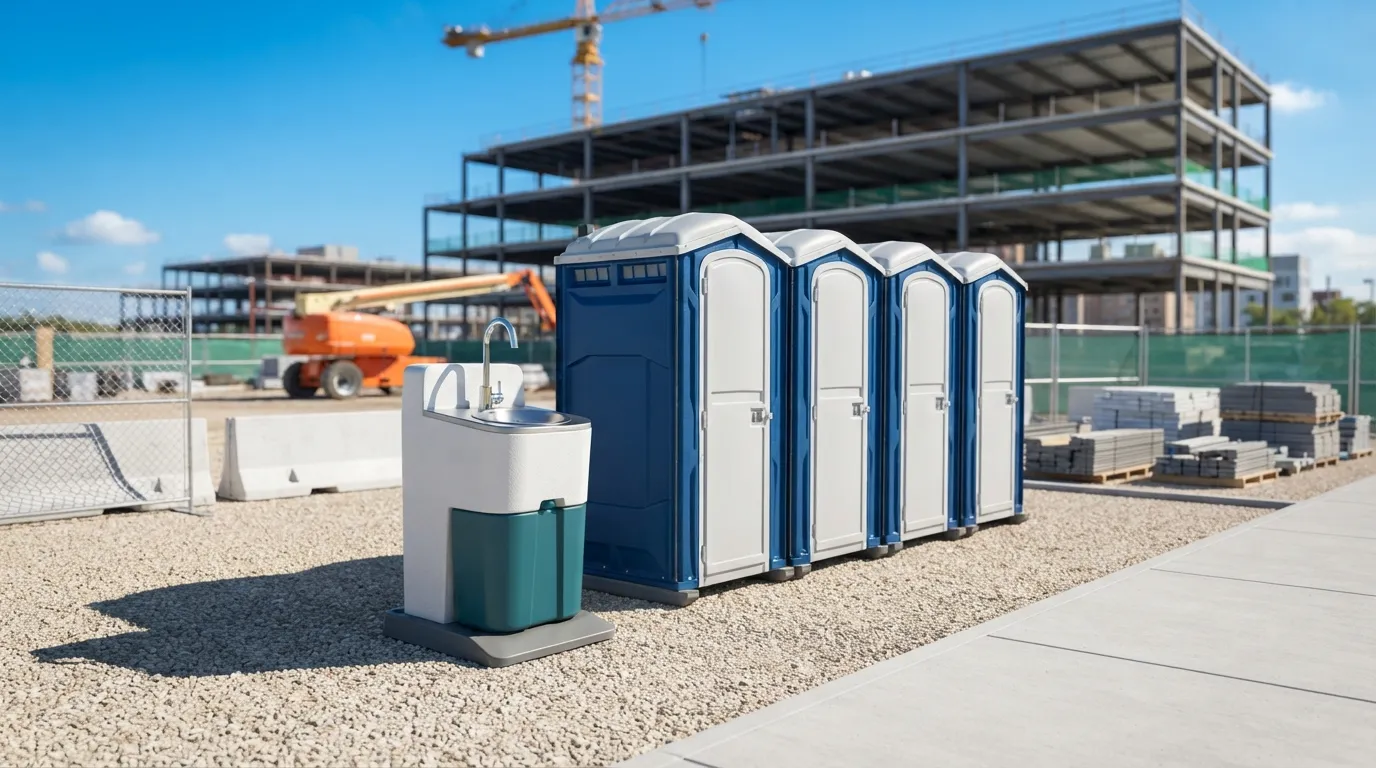
Water and hand hygiene belong at the same stations. OSHA 1926.51(a)(1) requires an adequate supply of potable water in places of employment, which applies to your race staff and volunteers even though runners are not covered the same way. A handwashing station rental or a simple portable sink rental at each restroom cluster keeps aid station volunteers handling food and water compliant and keeps lines shorter, and our handwashing requirements page spells out what that setup needs.
What does it cost to rent restrooms for a race?
Race restroom pricing runs by the day or the event, not by the week, since most races are single-day. A standard unit for a single event day, including aid stations and finish line clusters, runs on the same pricing structure as any short-term rental; the monthly porta potty rental page shows why longer training-season bookings pencil out differently.
| Unit type | Day rate | Event rate |
|---|---|---|
| Standard unit | $100 to $350 | $200 to $800 |
| ADA unit | $200 to $400 | - |
| Deluxe flushable | $85 to $1,200 | - |
Delivery fees for race-day setup typically run $100 to $500 depending on how many stations you need staged across the course. Full details on rate structure live on the porta potty rental cost and porta potty rental per day pages, and general course-wide sanitation needs are covered on portable restroom rental. For a race that spans a full weekend with packet pickup Friday and the run Sunday, ask about a weekend rate rather than booking two separate day rentals.
Bigger races sometimes need a restroom trailer rental at the finish line festival, especially if there is a beer garden or VIP area. A 4 stall restroom trailer handles higher-traffic finish areas better than a bank of standard units, and a larger 8 stall restroom trailer or a luxury restroom trailer suits a big finish-line festival with sponsor tents. Whatever the mix, book early: Sunnyvale race weekends compete for the same inventory as wedding restroom rental and festival restroom rental bookings on the same calendar.
How far in advance should we book race restrooms?
Book 60 to 90 days ahead for a race with more than 500 runners. Course permits, road closures and restroom placement all get finalized around the same time, and popular race weekends in Sunnyvale fill delivery schedules fast.
Do we need ADA-accessible units at every aid station?
Yes, if units are clustered there. ADA Standards section 213.2 requires at least one accessible unit per cluster, minimum 5 percent of the total. A single-unit aid station still needs to be accessible if it is the only restroom option nearby.
Can Sunnyvale Porta Pros service units mid-race?
Yes. For longer races we can schedule a servicing pass between the start and the finish, timed around your course schedule rather than a fixed weekly interval like ANSI/PSAI Z4.3's standard baseline.
What ground surface works best for race-day units?
Asphalt, packed gravel or mowed turf. ADA Standards section 302.1 requires stable, firm, slip-resistant ground, especially important near a finish chute where runners may be unsteady.
Do power poles near the course need special bracing?
Yes. Set the base on firm, level ground and use guy lines or ballast to keep the pole plumb before runners and volunteers arrive, since a leaning pole near a race lane is a real hazard.
Next step
Get a delivery date
Tell us the address, the dates and the headcount. We size the order and confirm the route.