Where should a porta potty go on a job site or in a yard?
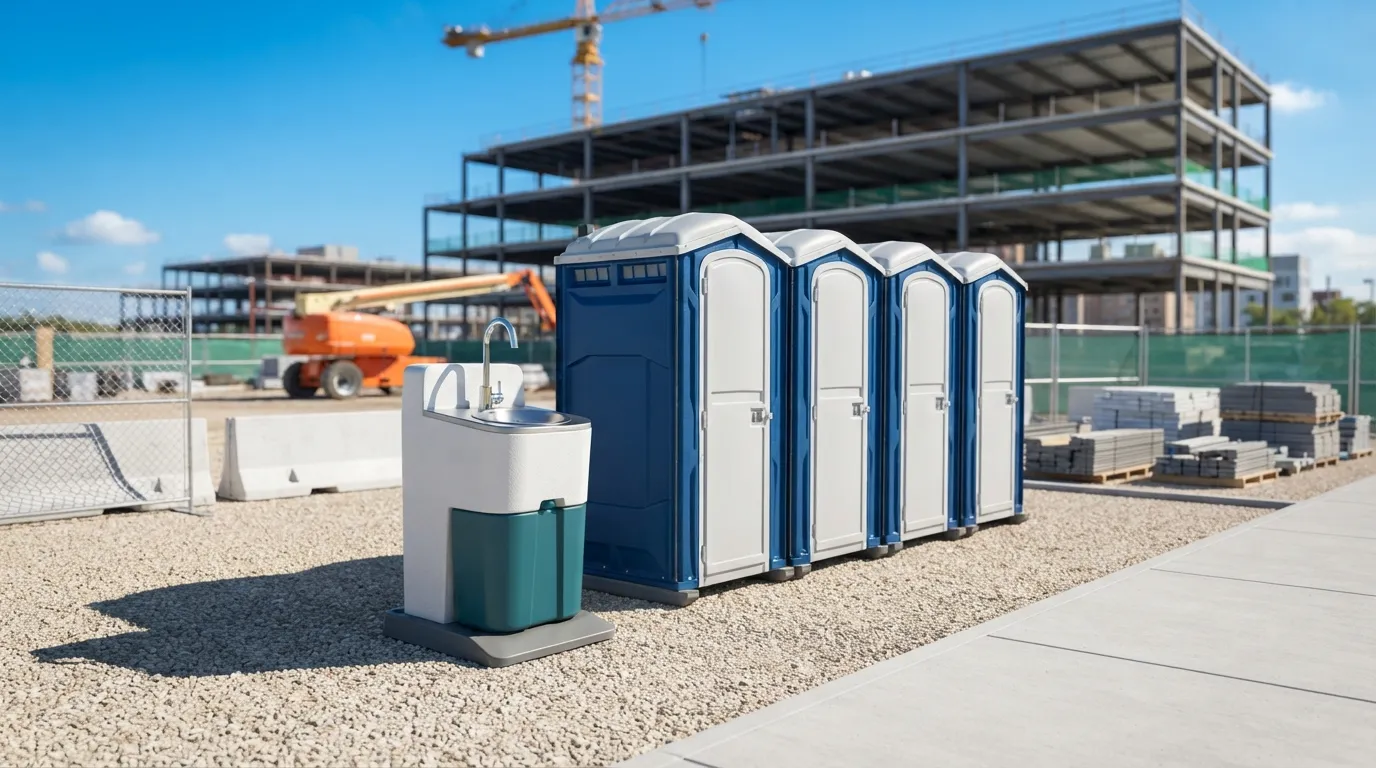
Pick flat, firm ground first. A standard unit runs about 44 by 48 inches on the ground and stands roughly 92 inches tall, so give it a footprint clear of low branches and soft turf. Sunnyvale Porta Pros wants a path the delivery truck can back into without threading between parked cars or across a sidewalk, since a blocked approach means a second trip and a delayed setup. If you're planning a construction site services layout, keep the unit within a short walk of the active work zone, not tucked behind material stacks. For events, check the event restroom rental guide on sightlines and crowd flow. Anyone placing a unit at the curb or on a public strip in Sunnyvale should treat that as NOT VERIFIED territory and confirm with the city directly before committing to a spot; see porta potty permit requirements for what to ask. Renters juggling multiple units on one lot often start with how many porta potties do i need before mapping exact spots.
What are the accessibility and code rules for placement?
If you're renting an ADA unit, the approach path needs at least 36 inches of clear width under ADA Standards 403.5.1, and the door opening itself must clear 32 inches per ADA Standards 404.2.3. Inside, plan for a 60 inch turning circle under ADA Standards 304.3.1, so the pad you pick has to be wider than the unit itself. Where multiple standard units cluster on one site, ADA Standards 213.2 requires at least 5 percent of them, and never fewer than one, to be accessible. Ground surface matters too: ADA Standards 302.1 calls for stable, firm, slip resistant footing, which rules out loose mulch or soft dirt after rain. Reach and controls follow ADA Standards 308.2.1 and 309.4, so latch hardware needs to work with one hand and low force. Full detail lives on the ADA accessible porta potty and ADA restroom requirements pages. For crews layering job-site sanitation with worker counts, OSHA 1926.51(c) sets the ratio, covered on OSHA portable toilet requirements.
Does placement affect dumpster and storage container permits too?
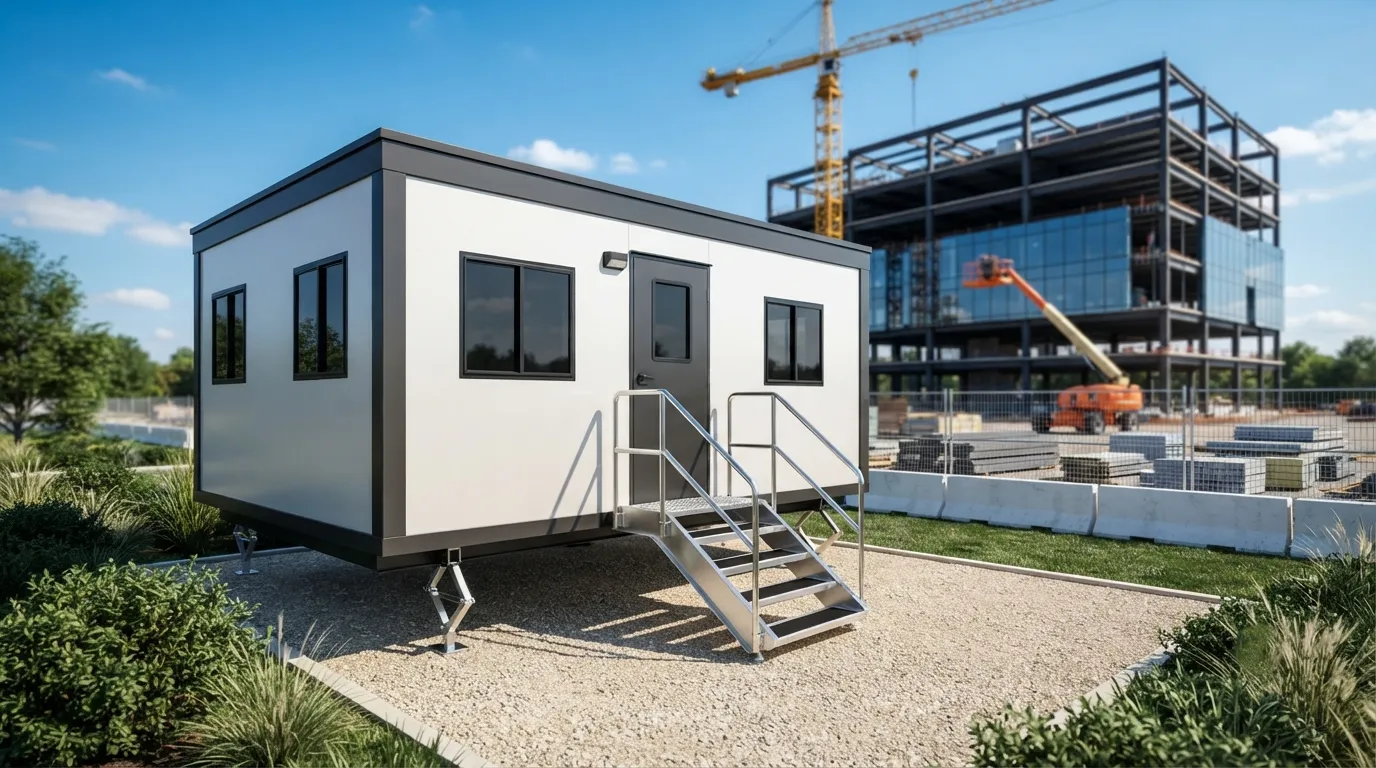
Yes, and this trips people up because a dumpster placement permit and a porta potty spot are two different conversations with the city, even on the same lot. Dumpster placement permit cost and rules vary by street versus private property, and Sunnyvale's specifics aren't published here, so check with the city before you assume a driveway placement is exempt. See dumpster permit requirements for the questions to bring. A roll-off needs about 60 feet of straight clearance behind the truck to drop safely, which rules out tight alleys and short driveways; that spec drives placement for roll-off dumpster rental and the size-specific pages like 20 yard dumpster rental and 30 yard dumpster rental. Storage containers and mobile office trailers have their own footprint math: a 40ft unit needs a longer, straighter approach than a 20ft one, and doors on a mobile office trailer rental need swing room that's easy to forget when you're boxed in by fencing. If a trailer door gets damaged on site, mobile office trailer replacement doors are a parts and labor conversation with your rental provider, not a DIY fix. See storage container rental and 20ft storage container for footprint specs before you commit to a spot.
How does placement change for septic, handwashing, and fencing gear?
Septic trucks need the same straight-line access as roll-offs, so a tank buried behind a fence or under a low carport overhang slows the pump-out. A typical 1,000 gallon residential tank gets pumped every 3 to 5 years depending on household size, per the how often to pump a septic tank guide, and access has to be clear each time, not just once. If you're outside Sunnyvale and need a placerville septic pumping service, that's a different service area than what Sunnyvale Porta Pros covers, so confirm coverage before you schedule. Handwashing stations pair with porta potties on most sites and need level ground near the work zone, not off to the side; 29 CFR 1910.141(d)(2) requires soap and towels or a hand dryer, and hand sanitizer alone doesn't satisfy that. If your crew is spraying paint or pesticide, OSHA 1926.51(f)(1) requires washing facilities for that specific contaminant exposure. Ozark river portable sink replacement parts, like pumps and spigots, are a manufacturer parts question separate from placement, but a station with a broken pump still needs the same flat, accessible spot as a working one. See handwashing station rental and temporary fence rental for barrier and sink layout together, since fencing under OSHA 1926.202 often frames the whole sanitation cluster on a job site.
| unit | duration | typical price |
|---|---|---|
| standard | day | $150 |
| standard | week | $200 |
| ada | day | $230 |
| delivery_fee | day | $150 |
Sunnyvale sites near Cupertino, 5.3 miles south, or Los Altos, 5.2 miles west, follow the same placement logic; distance just changes the delivery fee, not the ground rules.
How far from a building does a porta potty need to sit?
There's no fixed number in Sunnyvale's public rules that we can cite here, so treat 3 to 5 feet from walls and windows as a working minimum for odor and access, and confirm anything tighter with the property owner or city before you commit.
Can a porta potty go on a public sidewalk or street in Sunnyvale?
Placement in the public right of way needs confirming with the city directly. Sunnyvale Porta Pros can hold a unit on private property or a permitted lot, but street and sidewalk placement is a separate approval you should sort out before delivery day.
What ground surface works best under a portable toilet?
Compacted gravel, asphalt, or a concrete pad all work well since they're stable and drain fast. Soft lawn or loose dirt can shift under the roughly 92 inch tall unit after rain, so avoid low spots that pool water.
How much clearance does delivery need on a tight lot?
Plan for a straight, unobstructed path at least as wide as the truck plus a few feet of swing room. Roll-off and septic trucks in particular need about 60 feet of straight clearance behind them to back in safely.
Does an ADA unit need extra space compared to a standard one?
Yes. Beyond the 36 inch approach path and 32 inch door, an ADA unit needs a 60 inch turning circle inside, per ADA Standards 304.3.1, so its pad footprint runs noticeably larger than a standard unit's.
Next step
Get a delivery date
Tell us the address, the dates and the headcount. We size the order and confirm the route.